
Piano, Pool Table, and Grandfather Clock Moves: What Pros Do Differently
Moving day is stressful enough with boxes, furniture, and kids running around. Add a grand piano, a slate pool table, or a tall grandfather clock to the mix, and the risk (and anxiety) goes way up. That is why many families turn to specialty item movers instead of trying to “muscle through it” with friends and a rented truck. In this guide, we will show you exactly what professional movers do differently, what it costs, and how to choose the right team for your home.Quick answer:Professional specialty item movers protect pianos, pool tables, and grandfather clocks by creating a custom plan, fully padding or crating the item, safely disassembling what is necessary, using dollies and lift-gates for loading, and then carefully reassembling, leveling, and inspecting everything at delivery.
What Counts as a Specialty Item?
“Specialty item movers” usually means movers who handle very heavy, fragile, or high-value pieces that need more than a standard two-person crew and a few moving blankets. For most homes, the big three are:- Pianos – Upright and grand pianos often weigh 400–1,200+ pounds and contain hundreds of delicate parts.
- Pool tables – Slate tables can weigh 650–1,000 pounds or more when assembled, and must be leveled perfectly in the new home.
- Grandfather clocks – Tall, narrow, and top-heavy, with delicate internal mechanisms, weights, and pendulums.
Why Pros Handle These Moves Differently
Trying to slide a piano across hardwood floors or tilt a pool table through a doorway is more than a “weekend project.” Done wrong, it can crack slate, twist frames out of alignment, and cause serious injuries.Risks of DIY specialty item moves
- Injury risk – Back, shoulder, and hand injuries from lifting 400–1,000+ pound items.
- Damage to the item – Bent piano plates, cracked slate, damaged clock mechanisms.
- Damage to the home – Scratched floors, broken tile, dented drywall, damaged stair rails.
- Hidden costs – Repairs, tuning, refelting, or even full replacement can quickly cost more than hiring pros from the start.
How professional specialty item movers reduce risk
- They complete a walk-through and measurement before moving day.
- They bring specialized gear like piano boards, dollies, sliders, stair-climbing equipment, and lift-gate trucks.
- They use professional‐grade padding, shrink wrap, and crating to protect finishes and internal parts.
- They follow a step-by-step disassembly and reassembly plan tested on hundreds of similar moves.
- They carry proper insurance and licensing so you are not left on the hook if something goes wrong.
Pre-Booking Checklist for Specialty Item Movers
Before you sign a contract, use this checklist to compare movers and avoid unpleasant surprises later.Licensing, insurance, and experience
- Confirm the mover’s USDOT number (for interstate moves) and any required state licenses.
- Ask if they have completed similar moves in the past year (pianos, pool tables, grandfather clocks).
- Request proof of cargo and liability coverage and ask what is covered if there is damage.
- Check reviews that mention your exact item, not just general household moves.
Questions to ask before you book
- Will the item be disassembled and reassembled by your crew or a specialist?
- Do you use custom crating for fragile pieces or is it padded only?
- Is tuning or re-leveling included for pianos and pool tables?
- How do you handle stairs, tight corners, or elevators on my route?
- Do you offer climate-controlled storage if my items need to sit in between homes?
How Professional Movers Handle Pianos
Pianos are equal parts furniture and fine instrument. A small bump can throw off tuning; a larger impact can crack the plate or soundboard. That is why professional piano movers follow a very specific process.Step 1: Assessment and planning
- Measure the piano, doorways, stairs, and tight turns.
- Map the route from its current location to the truck and from truck to its new room.
- Note obstacles like steps, raised thresholds, narrow hallways, or steep driveways.
- Decide what equipment is needed: piano board, dollies, ramps, lift-gate, extra crew.
Step 2: Preparation and protection
- Lock or secure the piano lid and keyboard cover.
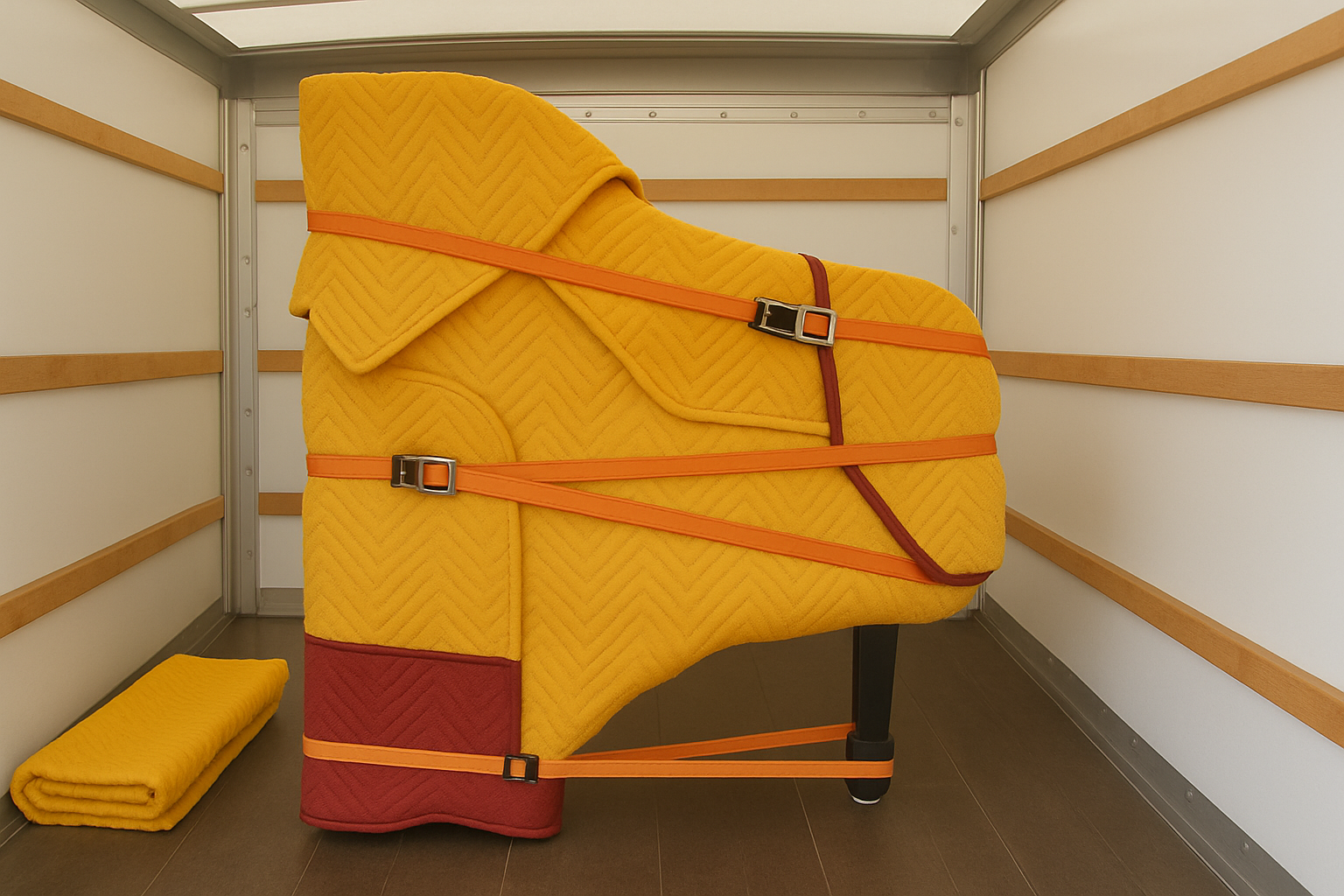
- Wrap the entire instrument in thick moving blankets, then secure with straps or shrink wrap.
- For grands, remove the legs and pedal lyre, padding each piece separately.
- Place the body on a padded piano board for safe movement.
Step 3: Moving, loading, and delivery
- Roll the piano carefully along the planned route, protecting floors as needed.
- Use a lift-gate or proper ramp to load into the truck without sharp angles or sudden drops.
- Secure the piano to the truck wall with straps to prevent shifting during transit.
- Reverse the process at delivery, then position the piano in its final location.
- Recommend a post-move tuning after the piano adjusts to the new environment.
Piano moving cost ranges (and what affects them)
Actual pricing depends on weight, distance, stairs, and access at each home, but national cost guides show that professional piano moves commonly fall into these ranges:- Local upright piano moves: often a few hundred dollars, depending on stairs and obstacles.
- Local grand piano moves: higher because of size, weight, and disassembly time.
- Long-distance piano moves: can reach into the low thousands when distance and special handling are involved.
How Professionals Move Pool Tables
A slate pool table is both extremely heavy and surprisingly fragile. The slate can crack, the frame can twist, and the felt can be ruined if it is dragged or lifted incorrectly.Step 1: Disassembly
- Remove pockets and rails, labeling hardware in bags for easy reassembly.
- Carefully pull or unstaple the felt so it can be reused or replaced.
- Remove the slate sections one at a time, supporting the full weight.
- Disassemble the frame and legs, keeping all bolts and brackets organized.
Step 2: Protection and loading
- Wrap slate pieces in thick blankets or place them in custom crates.
- Pad the frame, legs, and rails to protect edges and finishes.
- Load slate and frame flat, strapped securely against shifting.
Step 3: Reassembly and leveling
- Reassemble the frame and legs in the new room, checking for level.
- Install the slate, shim and level it with precision.
- Stretch and attach new or reused felt without wrinkles.
- Reattach rails and pockets, then test play to confirm a true roll.
Pool table moving cost ranges
Pool table moving prices vary with table size, number of slate pieces, stairs, and whether new felt is installed. National pricing data shows that many homeowners pay somewhere in the mid-hundreds for a standard local move, with higher costs for complex or long-distance jobs. Ask your mover whether the quote includes disassembly, reassembly, re-leveling, and any new felt or materials you might need.DIY vs professional pool table moving (quick comparison)
| Option | Pros | Cons |
|---|---|---|
| DIY with friends | Lower upfront cost; flexible timing. | High risk of slate cracks, frame damage, and injuries; no insurance. |
| Professional specialty movers | Proper tools, insured crews, expert re-leveling, less stress. | Higher upfront cost, must book in advance. |
How Professionals Move Grandfather Clocks
A grandfather clock is a precision timepiece wrapped in furniture. Inside the tall cabinet are weights, chains or cables, a pendulum, and delicate gears that must be secured before anything moves an inch.Step 1: Preparing the clock
- Stop the pendulum and carefully remove it, packing it in a padded box.
- Secure or remove the weights, labeling their positions (left, center, right).
- Protect glass doors and panels with padding and cardboard.
- Lock or secure doors and ensure no loose parts remain inside.
Step 2: Moving and transport
- Wrap the entire case in blankets and shrink wrap.
- Use a team to tilt and lift the clock onto a dolly; avoid twisting the case.
- Load upright in the truck and strap securely to prevent tipping.
Step 3: Reassembly and setup
- Place the clock in its new location, ensuring the floor is stable and level.
- Reinstall weights and pendulum in the correct positions.
- Reconnect any chime or time functions and test operation.
- Fine-tune the beat and chimes over the next day or two.
Grandfather clock moving cost ranges
Specialist clock movers often price jobs based on distance, clock size, age, and complexity. Local moves for a single clock typically fall into a mid-range price bracket, with long-distance or antique moves costing more due to custom packing and setup time. If your clock is moving as part of a larger relocation, ask your mover whether they handle the mechanism themselves or partner with a clock specialist.Timeline: When to Book and What to Do When
Specialty item moves go smoother when you start early. Use this rough timeline to stay ahead.4–8 weeks before moving day
- List all specialty items: pianos, pool tables, grandfather clocks, safes, etc.
- Request at least three quotes from movers who handle these items regularly.
- Ask each mover to send their license and DOT information in writing.
- Decide whether you need temperature-controlled storage for any items.
2–4 weeks before moving day
- Confirm your booking and time window for the specialty items.
- Clear paths inside your home and measure tricky spaces one more time.
- Arrange elevator reservations or parking permits if required in your city.
- Discuss weather plans with your mover if you are moving in stormy or very hot seasons.
1 week before moving day
- Remove items stored in piano benches, pool table drawers, or clock bases.
- Take photos of your items from all sides for your records.
- Confirm contact numbers and arrival window with your mover.
Route, Weather, and Storage Considerations
Specialty items do not like extremes. Long routes, high humidity, and big temperature swings can affect wood, glues, and finishes.- Long-distance routes: For moves between states, ask how long your items will be on the truck and whether they will transfer between trailers.
- Hot or humid climates: Pianos and clocks are sensitive to moisture and heat; limit time in non-climate-controlled spaces.
- Cold or winter moves: Sudden temperature changes can affect finishes; items may need time to acclimate before tuning or adjustments.
- Storage in transit: Choose temperature-controlled storage if your home will not be ready right away.
Copy-and-Use Checklists
You can copy these checklists into your notes app or print them to keep on the fridge.Before the movers arrive
- ☐ Confirm arrival time and crew size.
- ☐ Clear pathways from each item to the exits.
- ☐ Reserve elevators or loading zones if your building requires it.
- ☐ Remove fragile decor near tight corners or stairways.
- ☐ Take clear photos of each specialty item.
- ☐ Secure pets and children away from work areas.
On moving day
- ☐ Walk the crew through the home and point out each specialty item.
- ☐ Confirm disassembly plans for the piano, pool table, and clock.
- ☐ Ask how they will protect floors, stairs, and door frames.
- ☐ Keep driveways and access points clear for the truck.
- ☐ Review any paperwork before the truck leaves your home.
On delivery day
- ☐ Decide where each item will live before the truck arrives.
- ☐ Confirm that pool tables are reassembled and leveled.
- ☐ Check that the grandfather clock is running and chiming correctly.
- ☐ Inspect the piano’s case, legs, and keys for visible damage.
- ☐ Note any concerns on the delivery paperwork before signing.